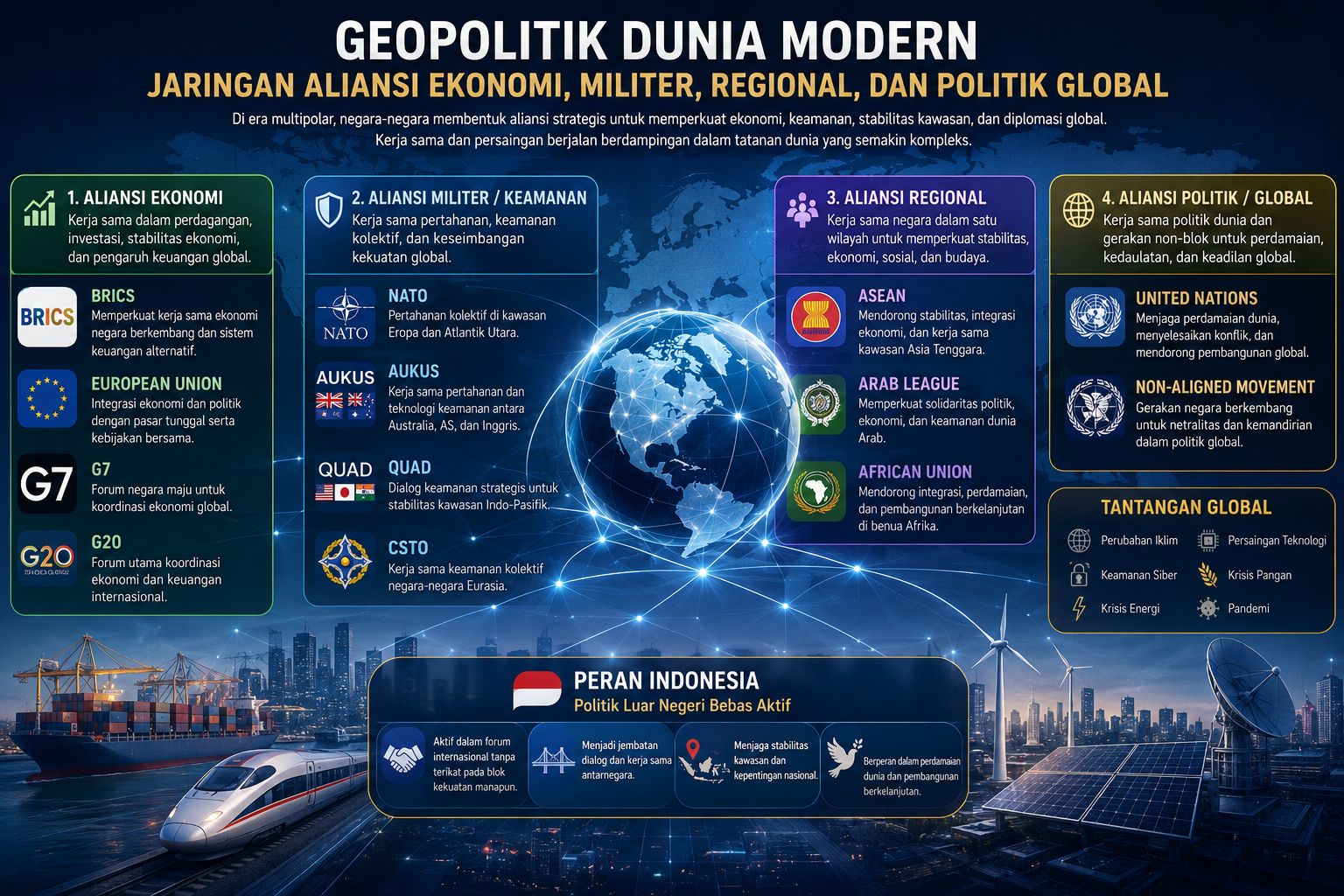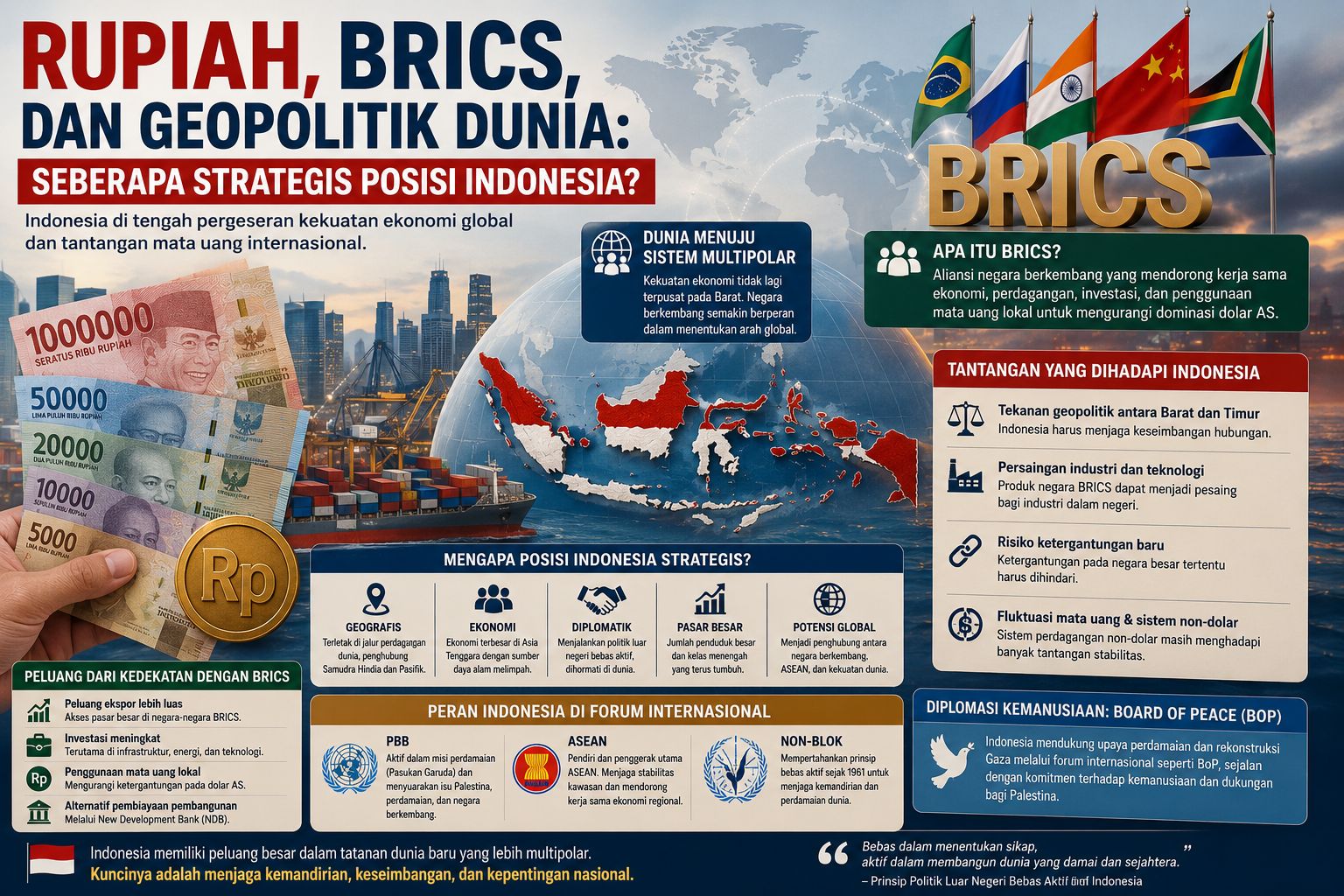
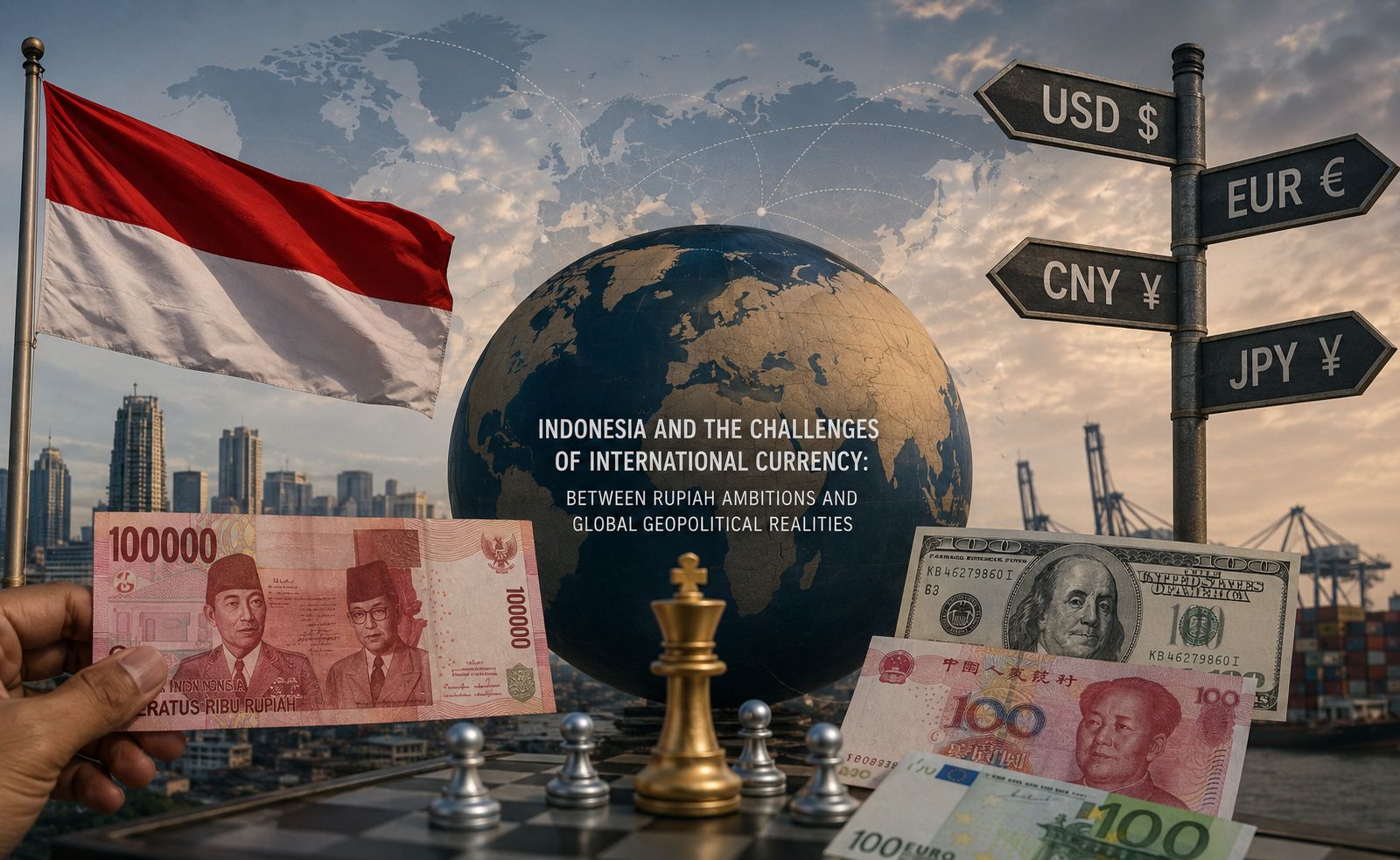
M.Fadhil Ramadhan (Muhammadiyah university Yogyakarta and Sultan Syarif Kasim State Islamic University Riau) – In the rising fierceness of worldwide economic rivalry, money is not simply a method for trade. The contest for global political power now even includes with it the US dollar, Chinese yuan, euro and digital currencies. In this case, Indonesia is at a defining moment: will the rupiah be stuck as just an iMac on the back seat of a world capture car, or step into the front seat gradually sliding across Jordan up there in Laos?
This problem has gained notoriety lately, following the Indonesian government’s incessant drive for local currency trade with foreign nations in some new policies. Local Currency Transaction (LCT). This is considered a strategy aimed at reducing reliance on the US dollar, which has been the preeminent currency in global trade.
Read also: Tawakkul and the Law of Attraction: Can They Coexist in Islam?
Based on Bank IndonesiaLast year has widened the local currency transaction cooperation with a number of countries, among others; Malaysia, thailand, Japan, China and South Korea. Bilateral trade can be carried out without necessarily using the US dollar as an intermediate currency.
But will Mr. Rupiah ever be well on its way to being a serious form of currency in the world?
Currency Is Not Just Economics, But Power
Relating Politics to Geography, currency strength is associated with the extent of global power projection in a country. The countries that have had a currency used worldwide are usually ones with strong economy, politically stable region, military power and high international confidence.
Take a point on the dollar, for instance; the US dollar isn’t dominant just because of its large economic size. That hegemony is further supported by international systems of political alliance, command over the globaleconomy (and financial system it’s no accident that dollars are king) and built into institutions like the IMF and World Bank where American national interest exerts a disproportionate degree of influence.
Read also: Sambut 1 Dzulhijjah: Momentum Emas Raih Pahala di Bulan Haji
Across the globe, China remains busy trying to promote the yuan through initiatives likeBelt and Road Initiative. As the International Monetary Fund (IMF) report indicates, even the yuan has already entered into the basket of reserve currencies in world orSpecial Drawing Rights(SDR).
In fact, Indonesia is strategically positioned. Indonesia has considerable geoeconomic capital as the biggest economy in Southeast Asia, a member of the G20 and located on one of the world’s busiest maritime trade routes. But the challenges it confronts are more complicated.
Read also: Orang Desa Memang Tidak Butuh Dollar, Tetapi Kehidupan Kami Tetap Dipengaruhi Dollar
Rupiah Still Faces Fundamental Issues
The biggest challenge to the rupiah is stability. And the exchange rate of the rupiah is still very vulnerable to fluctuations in global prices, ranging from rising interest rates at the Fed, geopolitical conflicts and uncertainty in global energy markets.
This condition has made many international investors still consider the US dollar a “safe haven” on the grounds that it is stronger than most currencies of developing countries, including the rupiah.
Furthermore, from the economic structure of Indonesia also still has import dependence in several strategic sectors. Imports are a large amount and the global payments being mostly in dollar makes demand for dollars automatically. As a result, the rupiah cannot avoid pressure.
Read also: Kajian Islami: Ruang “Charge” Iman di Tengah Lelahnya Kehidupan Modern
As reported World Bank, the development of a strong base in international trade to strengthen the national currency should start with a strong foundation of governance, which includes policy transparency to stimulate fiscal stability down to offering an credibility for financial institutions hold in the country.
It is here that the matter of governance becomes critical.
Governance Becomes a Determinant of World Trust
The internationalization of a currency cannot depend on the slogan of economic nationalism. The world needs trust.
The more legal certainty, efficient bureaucracy, political stability and continuity of economic policies a country can show off to its investors, the greater will be confidence about its currency.
Read also: Glow Up Natural? Mulai dari Tomat
Formalising the informal Sector Indonesia has made considerable strides in its digital financial and payment system reform in the last couple of years. To boost economic integration within ASEAN, Bank Indonesia is in fact developing a QR-based cross-border payment system associated with other countries as well.
Instead, they struggle against domestic challenges like corruption, development disparity, and regulatory uncertainty.
Corruption perception Index published by Report Transparency International consistently become one of the elements affecting global trust on developing country, include Indonesia.
Read also: Santri Darul Ulum Jambi Lolos SNBP, Langkah Awal Menuju Masa Depan Cerah
ASEAN Could Be a Middle Way
While the direct way to challenge the dollar is indeed hard, many observers believe that Indonesia can find a more achievable path in ASEAN to gradually boost the strength of its currency.
Regional cross-border transaction deeds using local currencies in Southeast Asia are expected to reduce reliance on the dollar and strengthen regional economic resilience.
In addition, the wave of development of the digital economy also brings new opportunities. These all have one thing in common, they are able to transact into any country less relying on the western financial systems!
Read also:Pesta Babi dan Krisis Hutan Papua yang Jarang Dibicarakan
But experts argued that currency internationalization is a decades-long process requiring sustained, not momentary but policy.
The Future of the Rupiah: Optimism That Must Be Realistic
Unlike, say the United States or China, we are not yet at that level in Indonesia. Nonetheless, movements to strengthen the rupiah are underway.
However, you cannot overlook the fact that Indonesia’s large capacity of domestic economic power, demographic bonus, geographical location in the Indo-Pacific region and its increasing role as the world’s vocabulary is a good capital.
The current challenge does not lie solely in the economy, but how Indonesia constructs governance acceptable to the world.
Read also: Mengenal Keberagaman Indonesia Melalui Permainan Tradisional Gasing
Which is precisely why at the end of the day, an international currency representing more than just transactions. They represent confidence, stability and a nation’s economic power internationally.
Editor: Tim Redaksi Ara Media Indonesia
Sampah Hukum dan Kesadaran Publik | Ari kurniawan, S.H., M.H
Sumber rujukan:
- Bank Indonesia. “Local Currency Transaction (LCT) Framework dan Kebijakan Internasionalisasi Rupiah.” Diakses pada 20 Mei 2026.
- International Monetary Fund (IMF). “Special Drawing Rights (SDR) Factsheet.” Diakses pada 20 Mei 2026.
- World Bank. “Financial Governance and Economic Stability in Developing Countries.” Diakses pada 20 Mei 2026.
- Reuters. “Indonesia Central Bank Raises Interest Rates Amid Rupiah Pressure.” Publikasi ekonomi Asia Pasifik, 2026.
- Reuters. “Japan and Indonesia Expand Local Currency Transaction Cooperation.” Publikasi ekonomi internasional, 2025.
- Cohen, Benjamin J. Currency Power: Understanding Monetary Rivalry. Princeton University Press, 2015.
- Kirshner, Jonathan. Monetary Orders: Ambiguous Economics, Ubiquitous Politics. Cornell University Press, 2003.
- Helleiner, Eric. The Status Quo Crisis: Global Financial Governance After the 2008 Meltdown. Oxford University Press, 2014.
- Gilpin, Robert. Global Political Economy: Understanding the International Economic Order. Princeton University Press, 2001.
- Strange, Susan. States and Markets. Bloomsbury Academic, 1994.